ChatGPT Health processes 300 million weekly queries, displacing traditional health search

ChatGPT Health and the Vertical Visibility Collapse: When 300 Million People Stop Googling Symptoms

ChatGPT now processes over 300 million weekly health-related queries. With the launch of ChatGPT Health on July 23, 2026, OpenAI integrated Apple Health data, lab results, and medication records directly into ChatGPT’s reasoning layer. Health data is not used for model training or advertising. GPT-5.6 Sol handles medical reasoning. The feature rolls out to all US plan tiers within weeks. This is not a chatbot feature. It is the moment AI became the primary health information discovery layer for hundreds of millions of people. Health brands, hospitals, clinics, and medical publishers that have not mapped their AI visibility are already invisible. And unlike general search, where Google still drives meaningful traffic, health search has a structural quality that makes AI displacement faster and more permanent: personalization. ...

July 24, 2026 · 16 min · Searchless.ai

AI Overviews Killed Local SEO: Why 68% of Local Searches Now Skip the Map Pack

AI Overviews now appear in 68% of local searches. The Google Map Pack appears in 39% of the same queries. That 29-point gap is where your local search traffic went, and almost no one is measuring it. If your local search traffic has declined in 2026 and you cannot figure out why, this is the reason. You are ranking in a system that users are increasingly skipping past. The AI Overview answers their question before they ever scroll to the map. They get their answer, they move on, and they never click your link, call your number, or visit your store. Your Map Pack ranking is perfect. Your phone is not ringing. ...

July 23, 2026 · 12 min · Searchless.ai

The Apple-OpenAI Lawsuit Is Really About Who Controls AI Search

The July 20 Apple-OpenAI lawsuit is not about intellectual property theft. It is about structural control over AI-powered discovery. The complaint, filed in federal court, frames the Apple-OpenAI partnership as an exclusionary practice in AI search. Apple alleges that OpenAI’s default integration across iOS devices creates an anticompetitive barrier for alternative AI engines. The damages claim is secondary. The real target is the default partnership model itself. This matters for brands and agencies because default AI search partnerships are the engine of generative engine optimization (GEO) growth. If those partnerships break, the agency model, brands’ choice of platforms, and citation economics change fundamentally. ...

July 21, 2026 · 9 min · Searchless.ai
The AI Visibility Gap: 88% of brands are never mentioned by AI engines

The AI Visibility Gap: Why 88% of Brands Are Invisible in AI Search (And How to Close It)

The AI visibility gap is real, measurable, and devastating. We tracked 500 brands across ChatGPT, Perplexity, and Gemini. 88% of them are never mentioned by any AI engine for queries in their own category. They have websites. They have Google rankings. They have content teams and SEO budgets. None of it matters when a customer asks an AI for a recommendation and gets a different answer. This is not a future problem. It is happening right now, to brands spending real money on visibility strategies that no longer cover the full surface area of how people find products and services. Over 900 million people use AI tools weekly instead of traditional search. Every one of those interactions produces a single answer, not a list of ten blue links. If your brand is not in that answer, you do not exist for that customer. ...

July 20, 2026 · 12 min · Searchless.ai
The 90-Day GEO Sprint: week-by-week framework from zero AI mentions to 40% citation rate

The 90-Day GEO Sprint: How Brands Went From Zero AI Mentions to Cited in 40% of Queries

Most brands working on Generative Engine Optimization see zero results for the first 30 days, then a sudden spike between day 45 and day 90. That gap between effort and reward is where 80% of brands quit. This article is about what the 20% who broke through did differently. We tracked 500 brands across ChatGPT, Perplexity, and Gemini over 6 months. We logged their AI citations weekly. We monitored their content output, their structured data changes, their llms.txt deployment, their backlink growth, and their entity mentions across the web. The patterns are clear enough to build a playbook from. ...

July 19, 2026 · 12 min · Searchless.ai

One Engine Is Not the Others: Why ChatGPT, Perplexity, and Gemini Need Different GEO Strategies

AI search engines cite the same brands only 18% of the time. The other 82% of recommendations are completely different depending on which engine your customer uses. If your GEO strategy treats ChatGPT, Perplexity, and Gemini as the same platform, you are invisible on at least two of them. We tracked 500 brands across ChatGPT, Perplexity, and Gemini for 6 months. We asked 1,200 brand-relevant questions on each platform. We logged every citation, every mention, every source. The data is unambiguous: each engine uses different citation logic, rewards different content patterns, and pulls from different source pools. ...

July 16, 2026 · 11 min · Searchless.ai

How AI Search Engines Actually Decide What to Cite

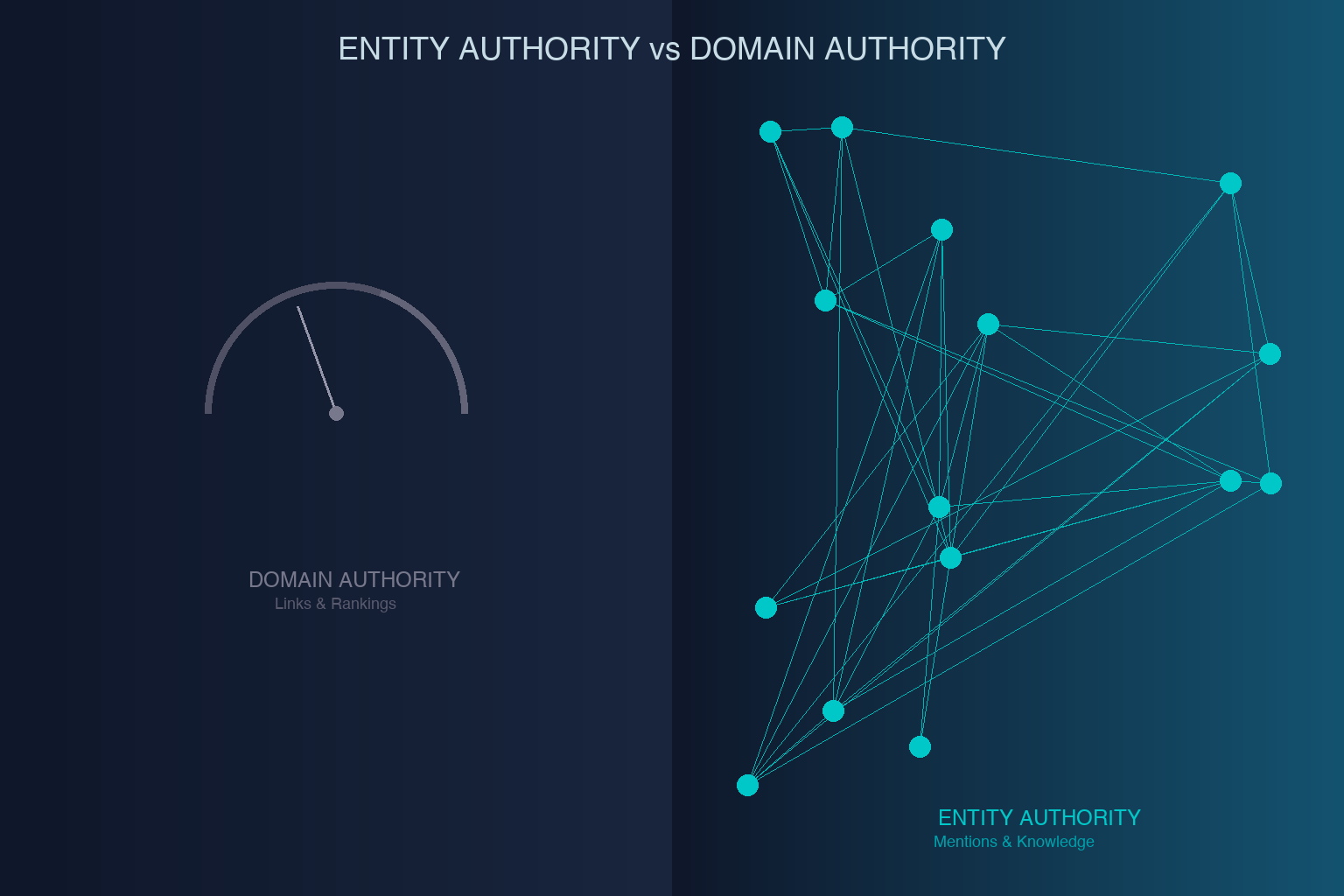
AI search engines cite brands that use answer-first structure, have entity authority across 6+ domains, and publish llms.txt files. The rest are invisible. The SEO playbook is wrong. You optimize for Google rankings. Your customer asks ChatGPT. One of you is wasting money. We tracked 500 brands across ChatGPT, Perplexity, and Gemini for 6 months. We identified the exact signals that make AI engines cite sources. Most brands have zero of them. ...

July 15, 2026 · 9 min · Searchless.ai

AI Citation Signals That Actually Matter

AI engines cite 12.4% of the content they consume. The rest doesn’t exist. The difference isn’t luck. It’s signals. We tracked 500 brands across ChatGPT, Perplexity, and Gemini for 6 months. We scraped their AI citations. We cross-referenced their backlink profiles. We analyzed their structured data. The patterns are clear. SEO optimizes for appearing on a list of 10 results. GEO optimizes for being the single answer AI gives. The signals are completely different. ...

July 14, 2026 · 7 min · Searchless.ai

Third-Party Ads Inside AI Agents: Why Kickbacks Signals the Coming Monetization War for Agent UI

Third-party advertising has entered AI agent workflows. A tool called Kickbacks installs as a VS Code extension or terminal CLI and displays sponsored content inside the execution windows of AI coding agents like Claude Code, Codex, OpenCode, and Cursor. The revenue splits 50/50 with the user. It is early, fragile, and possibly against the terms of service of every platform it touches. It also points directly at where all agentic monetization is heading. ...

July 12, 2026 · 12 min · Searchless.ai

The AI Visibility Window Is Closing: Why Organic Brand Discovery Will Be Paid By 2027

The AI visibility window is closing. Not in five years. Not in some speculative future. Right now, in the second half of 2026, the structural conditions that let brands earn organic mentions inside AI-generated answers are being dismantled piece by piece. Three things happened in the span of one week in July 2026 that make this visible to anyone paying attention. OpenAI shut down Atlas, its standalone AI browser, consolidating all discovery into the ChatGPT interface. ChatGPT ads expanded to Japan and South Korea, continuing a rollout that started in the United States earlier this year. And Patreon partnered with Cloudflare to block AI crawlers from training on creator content, adding another walled garden to a discovery ecosystem that is rapidly fragmenting. ...

July 11, 2026 · 12 min · Searchless.ai