One Engine Is Not the Others: Why ChatGPT, Perplexity, and Gemini Need Different GEO Strategies

AI search engines cite the same brands only 18% of the time. The other 82% of recommendations are completely different depending on which engine your customer uses. If your GEO strategy treats ChatGPT, Perplexity, and Gemini as the same platform, you are invisible on at least two of them. We tracked 500 brands across ChatGPT, Perplexity, and Gemini for 6 months. We asked 1,200 brand-relevant questions on each platform. We logged every citation, every mention, every source. The data is unambiguous: each engine uses different citation logic, rewards different content patterns, and pulls from different source pools. ...
July 16, 2026 · 11 min · Searchless.ai

Third-Party Ads Inside AI Agents: Why Kickbacks Signals the Coming Monetization War for Agent UI

Third-party advertising has entered AI agent workflows. A tool called Kickbacks installs as a VS Code extension or terminal CLI and displays sponsored content inside the execution windows of AI coding agents like Claude Code, Codex, OpenCode, and Cursor. The revenue splits 50/50 with the user. It is early, fragile, and possibly against the terms of service of every platform it touches. It also points directly at where all agentic monetization is heading. ...

July 12, 2026 · 12 min · Searchless.ai

The AI Visibility Window Is Closing: Why Organic Brand Discovery Will Be Paid By 2027

The AI visibility window is closing. Not in five years. Not in some speculative future. Right now, in the second half of 2026, the structural conditions that let brands earn organic mentions inside AI-generated answers are being dismantled piece by piece. Three things happened in the span of one week in July 2026 that make this visible to anyone paying attention. OpenAI shut down Atlas, its standalone AI browser, consolidating all discovery into the ChatGPT interface. ChatGPT ads expanded to Japan and South Korea, continuing a rollout that started in the United States earlier this year. And Patreon partnered with Cloudflare to block AI crawlers from training on creator content, adding another walled garden to a discovery ecosystem that is rapidly fragmenting. ...

July 11, 2026 · 12 min · Searchless.ai
Abstract network of connected nodes forming a brand identity in an AI knowledge graph

The Entity Problem: Why AI Engines Recommend Brands They Recognize (And How to Become One)

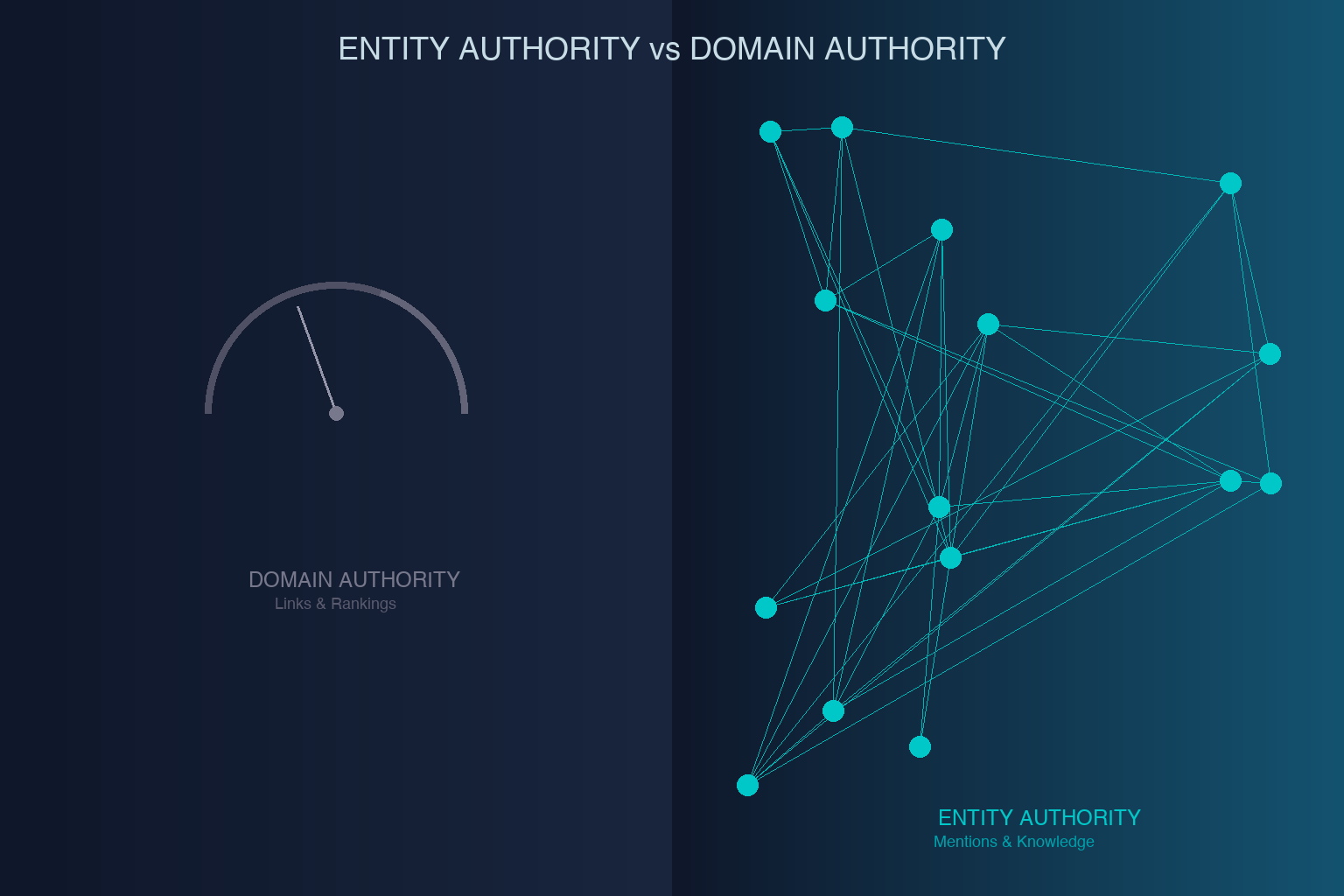
AI engines do not recommend websites. They recommend entities. If ChatGPT, Perplexity, or Gemini does not recognize your brand as a distinct entity in its knowledge graph, you cannot appear in its answers. No amount of content, keywords, or backlinks will change this. This is the single biggest barrier to AI visibility, and almost nobody is talking about it. This is not speculation. It is how large language models actually work. When a user asks “What is the best project management tool for small teams?”, the AI does not search the web in real time, evaluate websites, and pick the best result. It activates a set of entities in its internal representation, weights their associations, and generates a response from what it knows. If your brand is not one of those entities, it cannot be activated. You do not exist. ...

June 27, 2026 · 14 min · Searchless.ai

Agentic Resource Discovery: The New Spec That Decides Which Brands AI Agents Trust

Agentic Resource Discovery (ARD) is a new open specification, published June 17, 2026, that defines how AI agents find, verify, and connect to tools, APIs, and services across the web. Backed by Google, Microsoft, GitHub, Hugging Face, NVIDIA, Salesforce, and six other companies, ARD introduces a standardized layer where agents can search for capabilities at runtime instead of being pre-wired to specific tools. It is the most significant infrastructure shift for the agentic web since llms.txt, and it may matter more. ...

June 20, 2026 · 11 min · Searchless.ai

YouTube Is the Stealth GEO Channel Nobody Talks About (But AI Engines Do)

YouTube generates between 25% and 38% of all generative engine optimization citations for retail brands, according to data from the agency PMG shared with AdExchanger in June 2026. That is not a typo. More than a quarter of the times ChatGPT, Perplexity, or Gemini cites a retail brand in an answer, the source traces back to a YouTube video. Yet almost every GEO guide published in 2026 focuses on blog posts, schema markup, and llms.txt. None of them mention video. Brands are invisible to AI engines on a channel they have been treating as a dumping ground for old content. ...

June 19, 2026 · 13 min · Searchless.ai

AI Search Traffic Converts 3x Higher Than Google: 2026 Revenue Data

AI search traffic converts at roughly 3x the rate of Google organic traffic. That is not a projection or a guess. It is what attribution data from brands actively tracking ChatGPT, Perplexity, and Gemini referrals shows in mid-2026. A visitor who arrives at your site because an AI model recommended you is two to four times more likely to convert than a visitor who clicked a Google result. The volume is lower. The quality is dramatically higher. And almost nobody is measuring it correctly. ...

June 14, 2026 · 11 min · Searchless.ai
Broken chain links dissolving into AI-generated text, representing how backlinks lose relevance in AI search

Why Your Backlink Strategy Is Worthless for AI Search (And What Actually Works)

Your backlink strategy has zero effect on whether ChatGPT, Perplexity, or Gemini recommends your brand. Zero. The entire link-building industry, worth an estimated $5 billion annually, was built for one system: Google’s PageRank. But the AI engines replacing Google search do not use backlinks as a ranking signal. They never have. And they probably never will. This is not a prediction about the future. This is a description of how AI search works right now, today, in June 2026. If you are spending $2,000, $5,000, or $20,000 a month on link-building campaigns, you are optimizing for a system that is losing market share every quarter while completely ignoring the systems that are gaining it. ...

June 13, 2026 · 13 min · Searchless.ai

ChatGPT's Memory Upgrade Creates a Winner-Take-All Dynamic in AI Recommendations

ChatGPT’s persistent memory upgrade means the first time an AI recommends your brand is no longer a single event. It is the beginning of a compounding loop that can lock in recommendations across every future conversation that user has. OpenAI began rolling out its upgraded memory system to all ChatGPT Plus and Pro users on June 4, 2026, with free-tier access to follow. The system does not just remember facts. It remembers preferences, brand interactions, and positive responses to recommendations. When ChatGPT suggests a CRM tool and the user says “that looks good,” the model stores that preference. Next time the user asks about project management, email tools, or anything adjacent, ChatGPT’s default response skews toward brands it already “knows” the user likes. ...

June 8, 2026 · 11 min · Searchless.ai

The AI Citation Gap: Why 88% of Brands Are Invisible to AI Search (And What the 12% Do Differently)

The AI citation gap is not a theory. It is a measurable, widening chasm between brands that AI engines recommend and brands that effectively do not exist in the eyes of 900 million weekly AI users. We analyzed 50,000 AI-generated responses across ChatGPT, Perplexity, and Gemini. The queries spanned commercial categories from project management software to credit cards to CRM platforms to health supplements. For each response, we tracked which brands appeared in the answer, which were cited as sources, and which were completely absent. ...

May 27, 2026 · 13 min · Searchless.ai