AI citations influencing demand without clicks in 2026

AI Citations Without Clicks Are Breaking Your Attribution Model in 2026

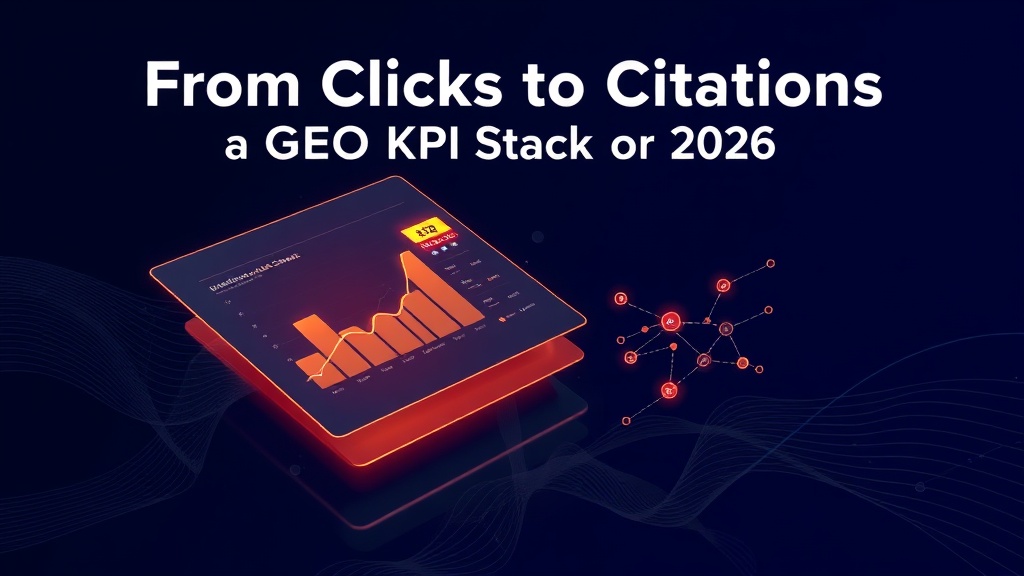
AI citations without clicks are breaking attribution because brands are influencing buying decisions inside ChatGPT, Perplexity, and Gemini without generating the sessions that GA4 was built to count. That is the core measurement problem in GEO right now. Marketers still expect visibility to show up as a visit, a source, and a conversion path. AI systems increasingly work differently. A user asks a question, gets a synthesized answer, sees two or three cited brands, remembers one, and converts later through branded search, direct traffic, or a sales conversation. The influence happened. The click never did. ...

April 11, 2026 · 11 min · Searchless.ai Research Team

Why AI Visibility Tools Are Suddenly Everywhere, and What That Means for GEO

AI visibility tools are suddenly everywhere because brands finally understand that ChatGPT, Gemini, and Perplexity are no longer side channels, they are active discovery surfaces that influence what people buy, download, and trust. That does not mean the market is mature. It means the pain is now obvious enough that new vendors can sell against it. In the last 24 hours alone, the pattern got clearer. One launch positioned itself around brand visibility across Google, ChatGPT, and Perplexity. Another focused on app discovery inside ChatGPT. At the same time, fresh reporting around Perplexity’s revenue trajectory and continuing pressure on Google AI Overviews accuracy reinforced the same point from different angles: AI answers are becoming a distribution layer, and brands need a way to measure whether they show up inside it. ...

April 10, 2026 · 12 min · Searchless.ai

AI Search Citation Manipulation Is Already Here, and It Will Break Fast for Brands That Copy Old SEO Tricks

AI search citation manipulation is already here because brands are publishing self-serving pages designed to influence AI answers before most teams even have a real measurement system. That sounds like a niche ethics story. It is not. It is the first predictable phase of a new distribution channel. The Verge reported this week that brands are engineering comparison pages and citation bait specifically to get surfaced inside Google AI Mode and other answer engines. That matters because it confirms something the market has been pretending not to see: GEO is no longer an experimental concept. It is already adversarial. ...

April 9, 2026 · 11 min · Searchless.ai

AI Search Is Recreating the Worst Parts of Old SEO, Faster

AI search is recreating the worst parts of old SEO because brands are already publishing self-serving comparison pages, engineered citation bait, and low-trust content designed to influence models instead of helping users. That shift is happening faster than most operators expected. For the past year, the optimistic version of GEO said AI search would reward clearer writing, stronger evidence, and better structured content. Part of that is true. But the darker side is already visible. As soon as AI engines started influencing discovery at scale, marketers imported the oldest SEO instinct on the internet: if a system controls traffic, people will try to game it. ...

April 9, 2026 · 11 min · Searchless.ai

AI Visibility Score vs SEO Rankings: What Marketers Need to Track in 2026

AI visibility score matters more than SEO rankings when the customer journey starts and ends inside ChatGPT, Gemini, Perplexity, or Google AI Overviews, because a number one ranking means very little if the model never mentions your brand. That is the measurement problem most marketing teams still refuse to face. SEO dashboards were built for a web where success meant impressions, clicks, and ranked URLs. AI search changed the output. The user now gets a synthesized answer, a short list of recommendations, or a single cited source. That means the unit of competition is no longer just ranking position. It is recommendation presence. ...

April 8, 2026 · 12 min · Searchless.ai

GEO Tools Are Becoming Their Own Category, and That Changes How Brands Should Measure Visibility

GEO tools are becoming their own category because AI visibility is no longer a reporting edge case inside SEO. It is a separate measurement problem with separate signals, separate workflows, and separate business consequences. That shift matters more than most marketers realize. For twenty years, the default assumption was simple: if you tracked rankings, clicks, backlinks, crawl health, and conversions, you had a solid map of search performance. That assumption breaks the moment a buyer asks ChatGPT for software recommendations, compares vendors in Perplexity, or gets a synthesized answer from Gemini without ever touching a classic search results page. ...

April 7, 2026 · 12 min · Searchless.ai

Why Most SEO Dashboards Are Blind to AI Search Demand in 2026

Most SEO dashboards are blind to AI search demand because they measure rankings, clicks, and impressions inside Google’s ecosystem while discovery is increasingly happening inside ChatGPT, Gemini, and Perplexity. That blind spot is now expensive. Search Engine Journal reported that Google’s global search share slipped to 90.01% in March 2026, a small-looking number that matters because Google spent two decades operating as the default gateway to the web. At the same time, new March 2026 AI referral reporting showed ChatGPT driving 78.16% of AI chatbot referrals, Gemini at 8.65%, and Perplexity at 7.07%. The exact percentages will move, but the directional signal is obvious: discovery is fragmenting, and most reporting stacks still pretend it is not. ...

April 7, 2026 · 12 min · Searchless.ai

AI Citation Volatility: Why 60% of Sources Change Every Month (And What to Do About It)

Between 40% and 60% of all sources cited by ChatGPT and Google AI Mode change every single month, according to new eMarketer research published in April 2026. If you spent six months building your way into AI recommendations, there is a measurable probability that you will disappear from those recommendations within 30 days of stopping. This is not a bug. It is how large language models and retrieval-augmented generation systems work. And it fundamentally changes the economics of digital visibility. ...

April 5, 2026 · 12 min · Searchless.ai

Pillar-Cluster Content Strategy for AI Engines: How to Restructure Your Content for GEO in 2026

The pillar-cluster content model that drove SEO results for the past decade is fundamentally broken for AI engines. Not slightly outdated. Broken. AI models don’t crawl your internal link structure the way Google’s spiders do. They don’t reward topical clustering the same way. And if you keep building content architectures designed for SERPs, you’ll keep being invisible to the 900 million people who now ask AI for answers instead of searching Google. ...

April 4, 2026 · 11 min · Searchless.ai

Gemini Is Now the #2 AI Traffic Source: What This Means for Your GEO Strategy

Google Gemini now sends more referral traffic to websites than Perplexity, making it the second-largest AI traffic source behind ChatGPT. The gap between ChatGPT and Gemini narrowed from 22x to 8x in under a year. If your GEO strategy only targets one or two AI engines, you are leaving traffic on the table. This shift did not happen overnight. Google embedded Gemini into Search, Android, Chrome, Workspace, and nearly every surface where users interact with information. That distribution advantage is now showing up in the referral data. Perplexity, despite strong growth and a loyal user base, cannot match the sheer surface area of Google’s ecosystem. ...

April 3, 2026 · 10 min · Searchless.ai