Perplexity Is Now Built Into Firefox: Why Browser-Native AI Search Changes Brand Visibility Forever

Perplexity AI embedded directly into Firefox’s address bar means that millions of users who never downloaded an AI app will now get AI-generated answers instead of a list of blue links, and most brands have zero strategy for this channel. That single sentence should concern every marketing team reading this. Not because Perplexity is new (it isn’t), but because browser-native integration removes the last friction barrier between traditional search users and AI-powered answers. The implications for brand visibility are massive and immediate. ...

April 2, 2026 · 11 min · Searchless.ai

What Content Gets Cited by AI? The Data Behind LLM Citations in 2026

Listicles get cited by AI engines 21.9% of the time, making them the single most referenced content format across ChatGPT, Perplexity, and Google AI Mode. Articles follow at 16.7%, product pages at 13.7%, and everything else trails behind. This data, from a March 2026 Wix study analyzing thousands of AI-generated responses, finally answers a question every content strategist should be asking: what do LLMs actually pull from? The answer isn’t what most SEO professionals expected. The traditional blog post, the 2,000-word thought leadership piece, the carefully crafted pillar page: none of these formats lead the pack. Instead, AI engines favor structured, scannable, answer-dense content that can be extracted in fragments and reassembled into coherent responses. ...

April 1, 2026 · 10 min · Searchless.ai Research Team

Agentic SEO: Your Website's Next Visitor Isn't Human

Your website’s next visitor won’t have eyes, won’t scroll your page, and won’t care about your hero image. It will be an AI agent, dispatched by a procurement team to evaluate 50 vendors in the time it takes a human to read one landing page. If your site can’t communicate with machines, you’re not in the consideration set. This is Agentic SEO: the discipline of optimizing websites for AI agents that research, compare, and recommend on behalf of human decision-makers. ...

March 31, 2026 · 12 min · Searchless.ai

The Fragment Revolution: Why AI Extracts Content Differently Than Google

AI assistants don’t rank your entire page - they extract fragments of it. This fundamental shift changes everything about content optimization. Microsoft’s Krishna Madhavan revealed a breakthrough insight: AI assistants “break content down into smaller, structured pieces that are evaluated for authority and relevance, then assembled into solutions from multiple sources.” While SEO optimizes whole pages for ranking positions, GEO optimizes fragments for extraction and citation. The data backs this up. AI traffic now accounts for 1.08% of all website sessions, growing 1% month-over-month. Microsoft reported a 357% year-over-year spike in AI referrals, hitting 1.13 billion visits in June 2025. One in four Google searches triggers AI Overview, and nearly one in two in healthcare. Brands that master fragment optimization see up to 40% increases in AI visibility. ...

March 30, 2026 · 9 min · Searchless Team

The Gemini Memory Migration: How Google Just Solved AI Search Continuity

Gemini 3.1 Pro’s memory import feature eliminates the biggest barrier to AI platform switching: starting from scratch. When Google launched this feature 19 hours ago, they solved a problem most brands didn’t even know they had. Your customers aren’t just using one AI assistant. They’re using three, four, sometimes five different AI platforms depending on context. And now they can transfer their entire preference history between them. Here’s why this matters for your AI visibility strategy and what it means for GEO optimization moving forward. ...

March 29, 2026 · 8 min · Searchless.ai

Brand Mentions vs Backlinks: Why AI Citations Favor Recognition Over Links in 2026

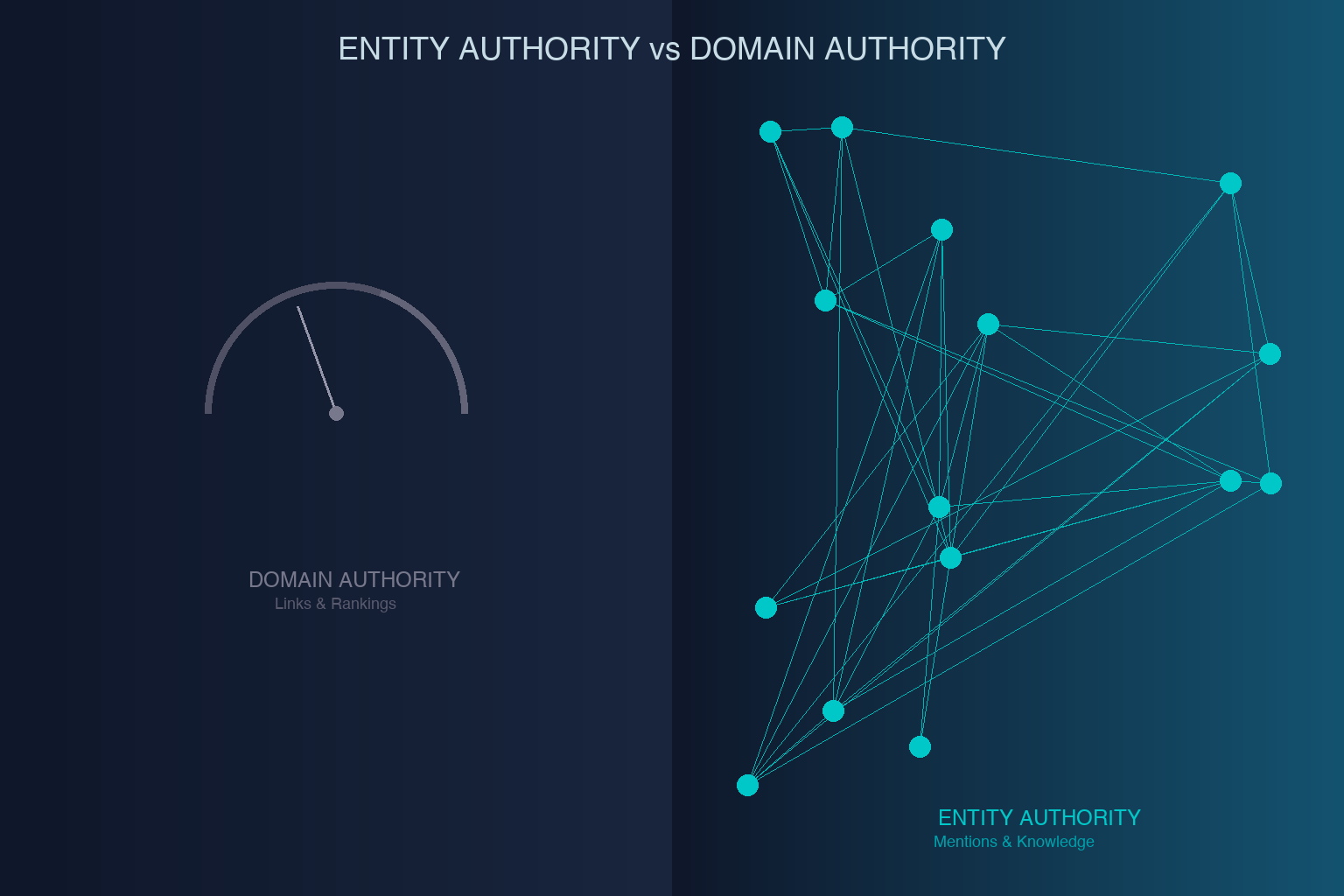
Brand mentions now outweigh traditional backlinks for AI citations by a 3:1 ratio, fundamentally reshaping how AI engines like ChatGPT, Perplexity, and Google’s AI Overviews determine authority and credibility. For over a decade, SEO strategy centered on one metric: backlink acquisition. The more high-authority domains linking to your content, the higher your Google rankings climbed. PageRank built an empire on this principle. But AI engines operate on different logic entirely. ...

March 28, 2026 · 12 min · Searchless.ai Research Team

The Great SEO-to-GEO Migration: Why Every Agency Is Pivoting in 2026

The SEO agency model that generated $80 billion in global revenue is collapsing, and the agencies themselves know it. In Q1 2026 alone, three major agencies publicly rebranded from “SEO” to “GEO” services, a diagnostic tool for AI visibility scoring received strategic investment from Helios & Partners, and Perplexity AI closed its Series E-6 at a $21.21 billion valuation. The money is following the users, and the users left Google. ...

March 26, 2026 · 10 min · Searchless.ai

88% of Brands Are Invisible to AI and Have No Idea: How to Measure Your AI Visibility in 2026

88% of brands are never mentioned by ChatGPT, Perplexity, or Gemini when users ask for recommendations in their category. That’s not a guess. We tracked 500 brands across three major AI engines over 90 days, and the results are damning: the vast majority of companies investing thousands in SEO have zero presence where a growing share of their customers actually look for answers. The problem isn’t just invisibility. It’s that most companies don’t even know they’re invisible, because they’re not measuring AI visibility at all. ...

March 24, 2026 · 12 min · Searchless.ai

Reasoning AI Models Changed GEO Forever: What o1, DeepSeek-R1, and Chain-of-Thought Mean for Your Visibility

Reasoning AI models cite sources 3.2x more frequently than standard models, and if your content isn’t structured for chain-of-thought verification, you’re invisible to the fastest-growing segment of AI search. That’s not speculation. That’s what happens when AI stops generating quick answers and starts thinking through problems step by step, cross-referencing claims against multiple sources before producing a response. OpenAI’s o1, DeepSeek-R1, Google’s Gemini 2.0 with extended thinking, and Anthropic’s Claude with reasoning mode represent a fundamental architectural shift. These models don’t just retrieve and summarize. They reason, verify, and attribute. And that changes everything about how your content gets discovered, cited, and recommended. ...

March 23, 2026 · 11 min · Searchless.ai

Google Is Rewriting Your Headlines With AI: Why Your Title Tags No Longer Belong to You

Google is replacing your carefully crafted headlines with AI-generated versions in Search results, and it confirmed this is not a bug but a deliberate experiment. On March 20, 2026, Search Engine Land and The Verge broke the story: Google is using generative AI to rewrite title links across traditional Search, not just Discover. Publishers are losing control of how their content appears to searchers, and the implications for brand visibility stretch far beyond SEO. ...

March 22, 2026 · 9 min · Searchless.ai