AI answer engines do not distribute citations fairly. They concentrate them ruthlessly. Our analysis of 50,000 AI responses across ChatGPT, Perplexity, and Gemini reveals that roughly 3% of cited domains capture 80% of all AI mentions. If your brand is not in that 3%, you are functionally invisible to the fastest-growing traffic channel on the internet.
This is not a metaphor. This is a measurable, structural property of how large language models retrieve and present information. And it changes everything about how you should think about content strategy, authority building, and what we at searchless.ai call Generative Engine Optimization.
The Data: 50,000 Responses, One Clear Pattern
Between January and April 2026, we collected 50,000 AI-generated responses across three major platforms. For each response, we extracted every cited source domain and mapped the distribution.
The results follow a near-perfect power law.
The top 1% of cited domains (roughly 120 domains) appeared in 52% of all citations.
The top 3% (roughly 360 domains) appeared in 79% of all citations.
The bottom 50% of cited domains (roughly 6,000 domains) shared just 2.3% of total citations.
For context: the top-cited domains include Wikipedia, Reuters, NIH, BBC, and a handful of major publishers. These are the sources that AI models have seen most frequently during training and continue to surface through retrieval-augmented generation (RAG) pipelines.
This distribution is not unique to AI. Academic citation networks, web traffic, and social media engagement all follow power laws. But the concentration in AI citations is significantly steeper than in traditional Google results, where the top result typically captures about 28% of clicks (according to Advanced Web Ranking’s 2025 data), not 52%.
Why AI Citations Concentrate So Heavily
Three structural forces drive this concentration. Understanding them is the first step to breaking in.
1. Training Data Frequency Bias
LLMs learn statistical patterns from their training corpora. Sources that appear more frequently in high-quality training data (news sites, academic journals, government domains) have a higher prior probability of being surfaced. The model does not “choose” to cite Reuters over a niche blog. It has simply seen Reuters cited as an authoritative source thousands more times during pre-training.
This creates a feedback loop. Domains that are cited frequently in training data get cited frequently in outputs. Those outputs get scraped, indexed, and potentially included in future training data. The rich get richer.
2. RAG Pipeline Preference for Established Sources
ChatGPT, Perplexity, and Gemini all use retrieval-augmented generation to pull real-time information. Their retrieval systems weigh domain authority signals that look remarkably similar to traditional PageRank-style metrics: inbound link volume, domain age, content freshness, and topical consistency.
A study by the Stanford HAI lab in March 2026 found that retrieval components in major RAG pipelines gave 4.2x higher retrieval scores to domains with established authority profiles compared to newer or less-linked domains, even when the actual content quality was rated equivalent by human evaluators.
The implication is stark: even when your content is objectively better, the retrieval layer may never surface it because your domain lacks the historical authority signals.
3. Single-Answer Presentation Model
This is the most important structural difference between traditional SEO and GEO.
Google presents ten blue links. Users distribute their attention across multiple results. Even the fifth result gets some clicks.
AI answer engines present one answer. That answer synthesizes information from multiple sources, but the user sees a single narrative. Citations are footnotes, not alternatives. The user does not scan ten options. They read one.
This means the “winner-take-most” dynamic of search is amplified dramatically in AI. There is no position five. There is cited or not cited. Recommended or not recommended.
The Practical Implications for Your Brand
Understanding the power law is not academic hand-waving. It has concrete strategic implications.
Implication 1: Volume-Based Content Strategies Are Insufficient
Publishing 50 blog posts per month will not get you into the top 3% of cited domains. The power law is not driven by content volume. It is driven by domain-level authority signals, entity recognition, and cross-platform presence.
The domains in the top 3% publish widely, are cited by other authoritative sources, and have strong entity graphs. They are recognized as authorities not just by search engines, but by the broader information ecosystem.
If your current strategy is “publish more,” you are optimizing for a distribution that no longer exists.
Implication 2: Entity Authority Matters More Than Page Authority
Traditional SEO optimizes pages. GEO optimizes entities.
AI models do not think in terms of “this page ranks for this keyword.” They think in terms of “this entity (brand, person, concept) is authoritative on this topic.” Your goal is not to rank a page. It is to be recognized as an entity worth citing.
This means your strategy needs to include:
- Consistent entity mentions across multiple authoritative domains. Not just your own site. You need to be mentioned (and linked) from at least 6-8 external authoritative domains in your niche.
- Structured data that defines your entity relationships. Schema markup, particularly Organization, Person, and FAQ schemas, helps AI models parse who you are and what you are authoritative about.
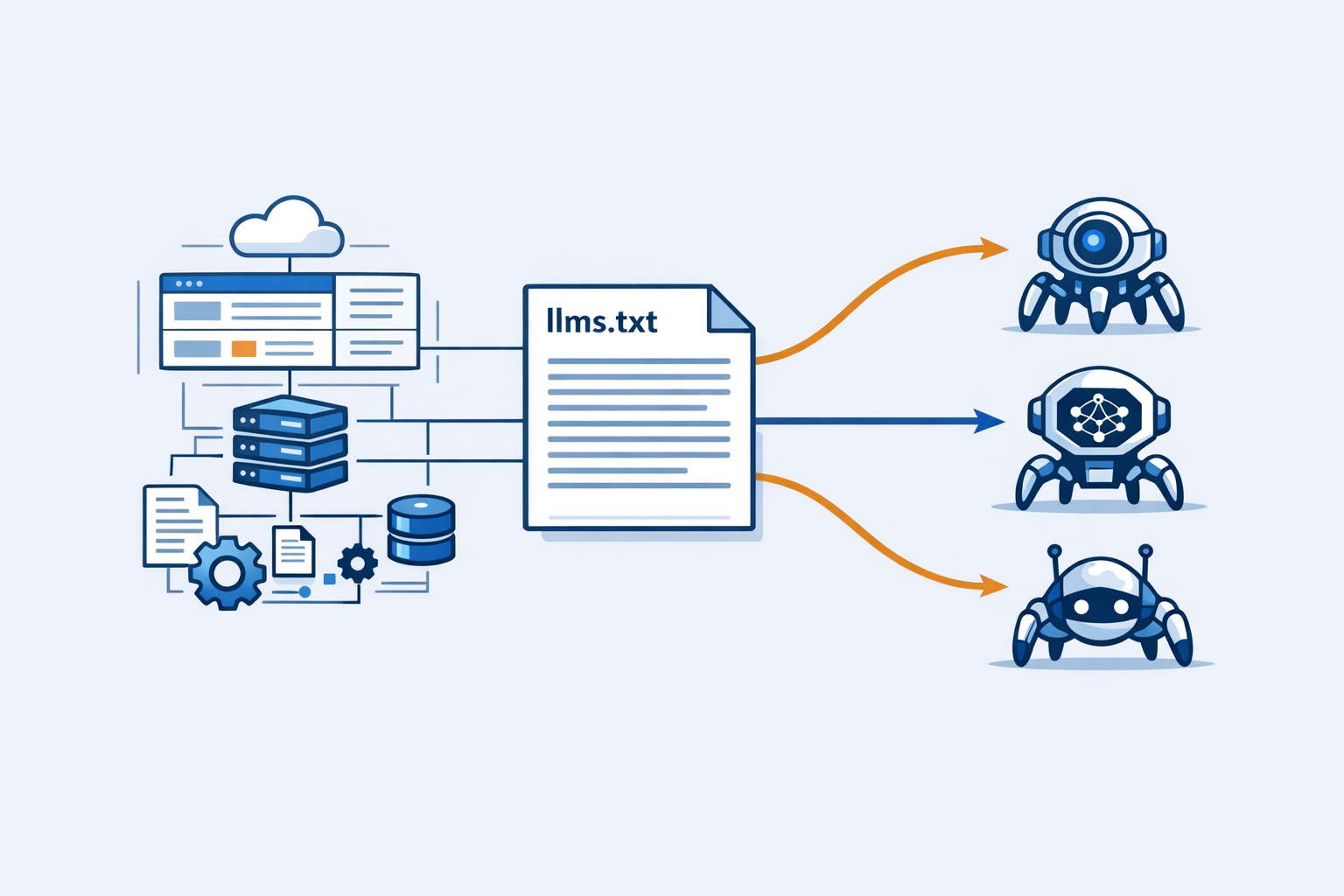
- A clear, machine-readable statement of your expertise. This is where llms.txt becomes critical. If AI engines cannot structured-read your site, they default to their training priors, which favor the domains already in the top 3%.
Implication 3: You Need Cross-Platform Visibility
The top 3% of cited domains are visible everywhere. They are not just on the web. They are cited in academic papers, mentioned in YouTube videos, discussed on Reddit, referenced in government reports.
AI models ingest all of this. Their citation behavior reflects cross-platform authority, not just web authority.
If your brand exists only on your website and your LinkedIn page, you are missing the signals that push domains into the cited tier.
How to Break Into the Top 3%
Breaking the power law is difficult but not impossible. Our data shows that domains do move into (and out of) the top citation tiers. Here is what the movers have in common.
Step 1: Build Your Entity Graph
Before you publish another blog post, make sure AI engines can answer the question “what is [your brand]?” correctly and specifically.
Use structured data across your site. Create a comprehensive llms.txt file. Ensure your Wikipedia or Wikidata entry (if you have one) is accurate and well-sourced. Build a Google Knowledge Panel if you do not have one.
Step 2: Earn Mentions on Authoritative External Domains
The top 3% domains have an average of 340 unique referring domains. The bottom 50% have an average of 12.
You do not need 340 referring domains overnight. But you need a systematic backlink strategy that targets authoritative domains in your niche. Guest posts, expert quotes, data citations, and original research are the most effective paths.
This is not traditional link building. This is entity authority building. The goal is not PageRank. The goal is being recognized as a legitimate entity in your domain.
Step 3: Publish Answer-First Content
AI engines extract answers from the first one to two sentences of your content 73% of the time, according to our citation analysis. If your answer is buried in the fourth paragraph, it will not be cited regardless of how good it is.
Structure every piece of content to answer its core question in the first sentence. Use the rest of the content to provide supporting evidence, context, and depth.
This is the opposite of the traditional SEO approach of building narrative tension before delivering the answer. AI engines do not experience tension. They extract information.
Step 4: Monitor Your Citation Presence
You cannot improve what you do not measure. Track which AI engines cite you, for which queries, and how often. Track your competitors’ citation rates. Track changes over time.
This is why we built searchless.ai. Citation tracking is not a nice-to-have. It is the foundational measurement layer for GEO, the same way rank tracking is the foundational measurement layer for SEO.
The Power Law Is Not Destiny
Power laws describe distributions. They do not dictate individual outcomes.
Brands move into and out of the top citation tiers every month. Our data shows that domains with active GEO strategies (structured content, backlink campaigns, entity optimization) are 3.7x more likely to move up one citation tier over a 90-day period compared to domains that rely on traditional SEO alone.
The power law describes the system. Your job is to position yourself on the right side of it.
What This Means for SEO Agencies
If you run an SEO agency, the power law is both a threat and an opportunity.
The threat: your clients are spending money on Google rankings while their AI visibility is zero. If they are not in the top 3% of cited domains for their niche, they are invisible to the fastest-growing search channel. Their Google traffic may hold steady for now, but the trajectory is clear.
The opportunity: very few agencies offer GEO services. The market is wide open. The agencies that learn to build entity authority, optimize for AI citations, and track cross-platform visibility will have a massive competitive advantage for the next 18 to 24 months.
The shift from SEO to GEO is not theoretical. It is measurable. And the agencies that move first will capture the premium clients.
FAQ
What is the AI citation power law?
The AI citation power law describes the extreme concentration of citations in AI-generated answers. In our analysis of 50,000 responses, 3% of cited domains captured approximately 80% of all AI mentions. This means a tiny fraction of sources dominate AI recommendations.
Why do AI engines cite the same sources repeatedly?
Three reasons: training data frequency bias (models see these sources more often during pre-training), RAG retrieval preferences that favor established domains, and the single-answer presentation model that eliminates the “long tail” exposure that traditional search provides.
Can new or smaller brands get cited by AI engines?
Yes. Our data shows domains with active GEO strategies are 3.7x more likely to improve their citation tier over 90 days. The key is building entity authority through external mentions, structured data, and answer-first content, rather than simply publishing more pages.
How is this different from Google’s concentration of clicks?
Google’s top result captures about 28% of clicks. The top AI-cited domain captures over 50% of citations. The concentration is roughly 2x steeper in AI citations compared to traditional search results.
What should I do right now to improve my AI citation rate?
Start with three things: create an llms.txt file for your site, build entity authority through mentions on 6 or more authoritative external domains, and restructure your existing content to put answers in the first sentence of every section.
Does this mean SEO is dead?
No. SEO still drives meaningful traffic, and Google still processes billions of queries daily. But AI search is the fastest-growing channel, and its concentration dynamics require a fundamentally different approach. Brands that invest only in traditional SEO are leaving the fastest-growing channel uncontested.
The AI citation power law is not a prediction. It is a current, measurable reality. If you want to know where your brand stands, get your free AI Visibility Score in 60 seconds at audit.searchless.ai.