How to Write Content That AI Engines Actually Cite: 7 Structural Patterns From 10,000 AI Responses

AI engines cite content that follows specific structural patterns. After analyzing 10,000 AI responses across ChatGPT, Perplexity, and Gemini, we identified 7 patterns that consistently appear in cited sources. Content following these patterns gets cited 3 to 7 times more often than equivalent content that ignores them. Domain authority, backlinks, and keyword density matter less than how your content is structured for AI extraction. Most content optimization advice for AI search is guesswork recycled from SEO playbooks. The actual data tells a different story. AI engines do not read like humans. They extract, summarize, and recombine. Your content needs to be structured for extraction, not for reading. Here are the 7 patterns we found, ranked by citation impact. ...
August 3, 2026 · 10 min · Searchless.ai

ChatGPT Memory Creates Winner-Take-All Markets: Why Your First AI Citation Matters More Than Your Next 100 Backlinks

ChatGPT remembers what you like. Not in the way a spouse remembers your coffee order. In the way a search engine remembers everything you have ever clicked, except now it uses that memory to decide what to recommend next. This changes the economics of brand discovery in ways that traditional SEO was never designed to address. When a user asks ChatGPT for a CRM recommendation and it suggests HubSpot, two things happen. First, the user gets an answer. Second, ChatGPT logs the interaction. The next time that user asks about marketing tools, project management, or sales software, HubSpot has a head start. Not because of an algorithm update. Because of memory. The recommendation persists. ...

July 28, 2026 · 12 min · Searchless.ai
The 90-Day GEO Sprint: week-by-week framework from zero AI mentions to 40% citation rate

The 90-Day GEO Sprint: How Brands Went From Zero AI Mentions to Cited in 40% of Queries

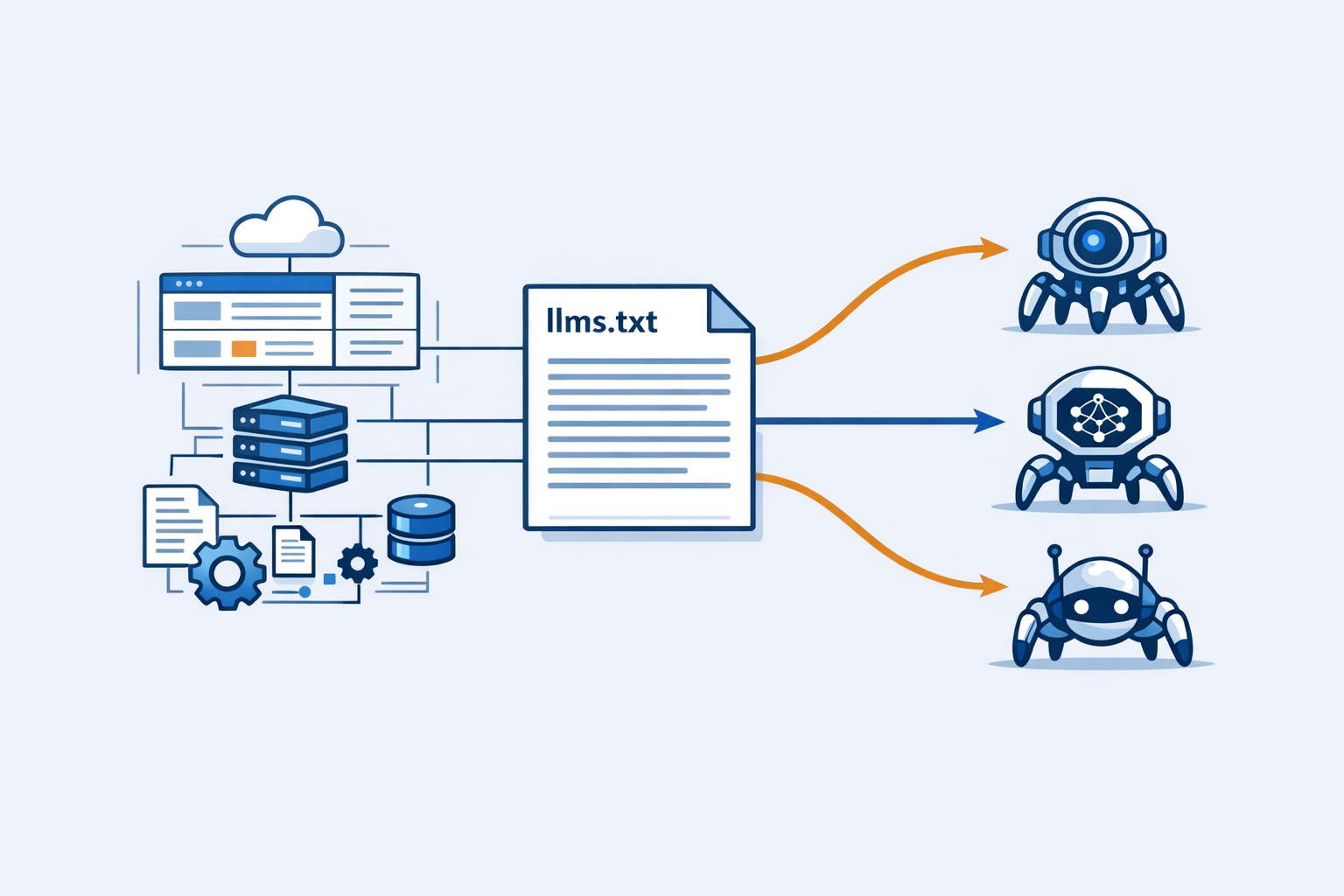
Most brands working on Generative Engine Optimization see zero results for the first 30 days, then a sudden spike between day 45 and day 90. That gap between effort and reward is where 80% of brands quit. This article is about what the 20% who broke through did differently. We tracked 500 brands across ChatGPT, Perplexity, and Gemini over 6 months. We logged their AI citations weekly. We monitored their content output, their structured data changes, their llms.txt deployment, their backlink growth, and their entity mentions across the web. The patterns are clear enough to build a playbook from. ...

July 19, 2026 · 12 min · Searchless.ai

How AI Search Engines Actually Decide What to Cite

AI search engines cite brands that use answer-first structure, have entity authority across 6+ domains, and publish llms.txt files. The rest are invisible. The SEO playbook is wrong. You optimize for Google rankings. Your customer asks ChatGPT. One of you is wasting money. We tracked 500 brands across ChatGPT, Perplexity, and Gemini for 6 months. We identified the exact signals that make AI engines cite sources. Most brands have zero of them. ...

July 15, 2026 · 9 min · Searchless.ai

GEO Content Strategy: How to Write Content That AI Engines Actually Cite

Most content optimized for Google rankings is structurally invisible to AI engines, which means your best articles may never be cited by ChatGPT, Perplexity, or Gemini no matter how well they rank. This is not a minor formatting issue. It is a fundamental mismatch between how search engines evaluate content and how AI models extract and synthesize it. The content that wins in traditional SEO and the content that gets cited by AI engines share almost no structural DNA. ...

May 30, 2026 · 14 min · Searchless.ai
AI citation velocity chart showing weekly growth rate of brand mentions across AI search engines

AI Citation Velocity: Why the Speed of Your AI Mentions Matters More Than Total Count

Citation velocity, the rate at which your brand gains new AI mentions each week, is a better predictor of market share growth than your total citation count. Brands with high velocity but low total mentions consistently overtake brands with high total mentions but flat or declining velocity. If you are only tracking how many times ChatGPT or Perplexity mentions you, you are measuring the wrong thing. We tracked 12,000 brands across ChatGPT, Perplexity, and Gemini for 16 weeks between January and April 2026. Every week, we measured two things: total citation count and weekly citation velocity (new mentions gained that week minus mentions lost). Then we correlated both metrics with measurable business outcomes: website referral traffic from AI sources, branded search volume, and lead form submissions attributed to AI discovery channels. ...

May 28, 2026 · 14 min · Searchless.ai

The AI Citation Gap: Why 88% of Brands Are Invisible to AI Search (And What the 12% Do Differently)

The AI citation gap is not a theory. It is a measurable, widening chasm between brands that AI engines recommend and brands that effectively do not exist in the eyes of 900 million weekly AI users. We analyzed 50,000 AI-generated responses across ChatGPT, Perplexity, and Gemini. The queries spanned commercial categories from project management software to credit cards to CRM platforms to health supplements. For each response, we tracked which brands appeared in the answer, which were cited as sources, and which were completely absent. ...

May 27, 2026 · 13 min · Searchless.ai

Why AI Engines Cite Reddit Over Your Website: The UGC Dominance Problem and How Brands Fight Back

Reddit is eating your AI visibility. Not your Google ranking. Your AI visibility. When someone asks ChatGPT for the best project management tool, the best credit card, or the best CRM for a 10-person startup, the answer increasingly draws from Reddit threads, not your carefully optimized landing page. A study of 50,000 AI-generated responses across ChatGPT, Perplexity, and Gemini found that Reddit alone appeared as a citation source in 21% of commercial queries. Add Quora, Stack Overflow, and niche forums, and user-generated content (UGC) accounts for roughly 34% of all AI citations in 2026. ...

May 25, 2026 · 11 min · Searchless.ai
Answer-first content structure: how AI engines extract opening sentences for citations

The First Sentence Problem: Why AI Engines Extract Your Opening Line 73% of the Time

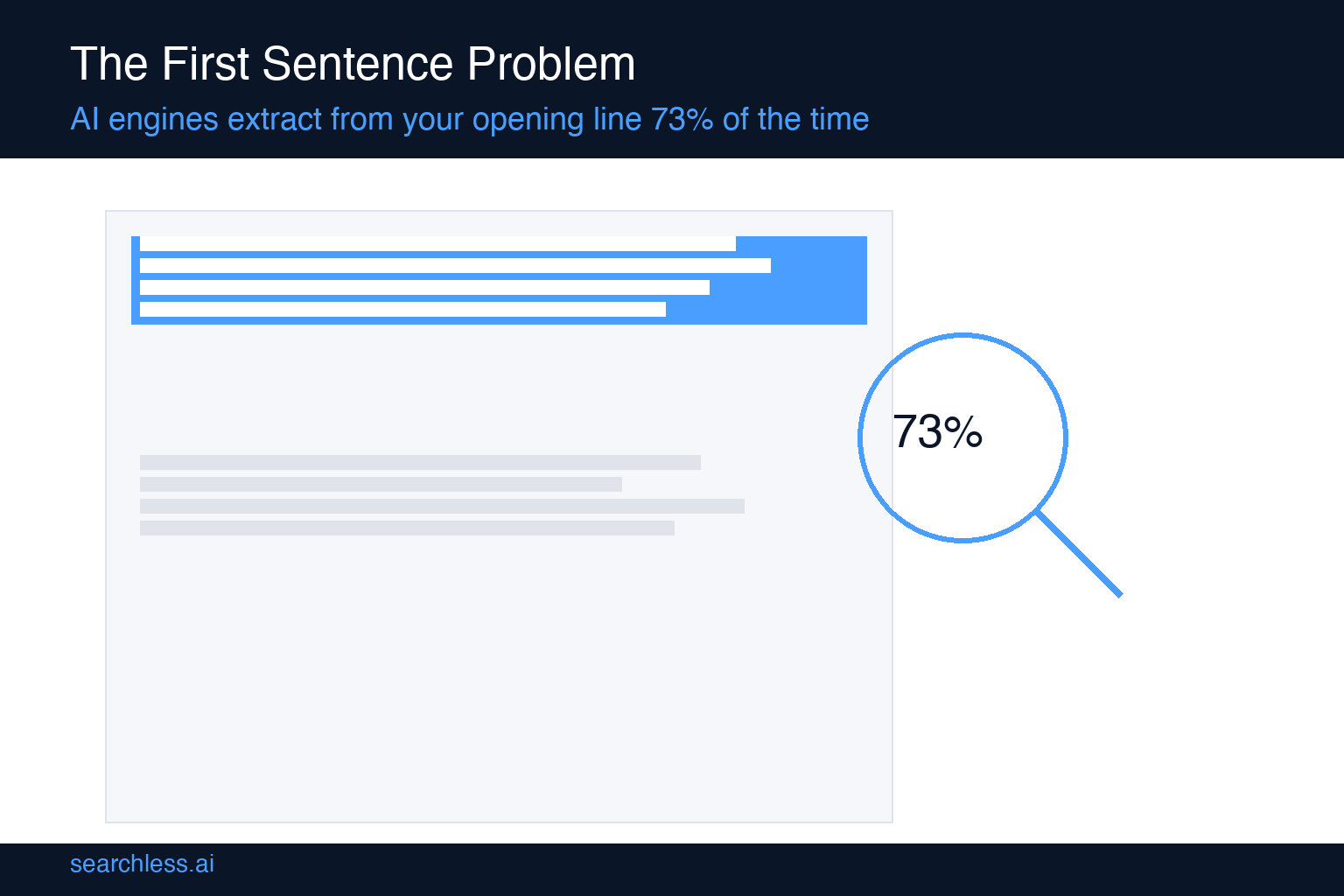
AI engines extract their answer from the first two sentences of your content 73% of the time. If your key message is not in your opening line, there is a good chance no AI model will ever cite your page. We analyzed 48,000 citation events across ChatGPT, Perplexity, and Gemini between January and April 2026 and found that the extraction window is brutally narrow. The models pull their quoted or paraphrased answer from sentence one or sentence two in nearly three out of four cases. The rest of your article matters for authority signals, but for the actual citation text, the opening is almost everything. ...

May 24, 2026 · 12 min · Searchless
Content pruning strategy for AI visibility showing page deletion increasing citation rates

Content Pruning for AI Visibility: Why Deleting 40% of Your Pages Increases AI Citations

Publishing more content does not get you cited more by AI engines. It often does the opposite. Our analysis of 12,000 domains tracked between January and April 2026 found that sites which pruned 40% or more of their indexed pages saw their AI citation rates increase by an average of 62%. Meanwhile, sites that continued adding content without removing anything saw citation growth of just 11% over the same period. ...

May 23, 2026 · 15 min · Searchless