GEO Tools Are Becoming Their Own Category, and That Changes How Brands Should Measure Visibility

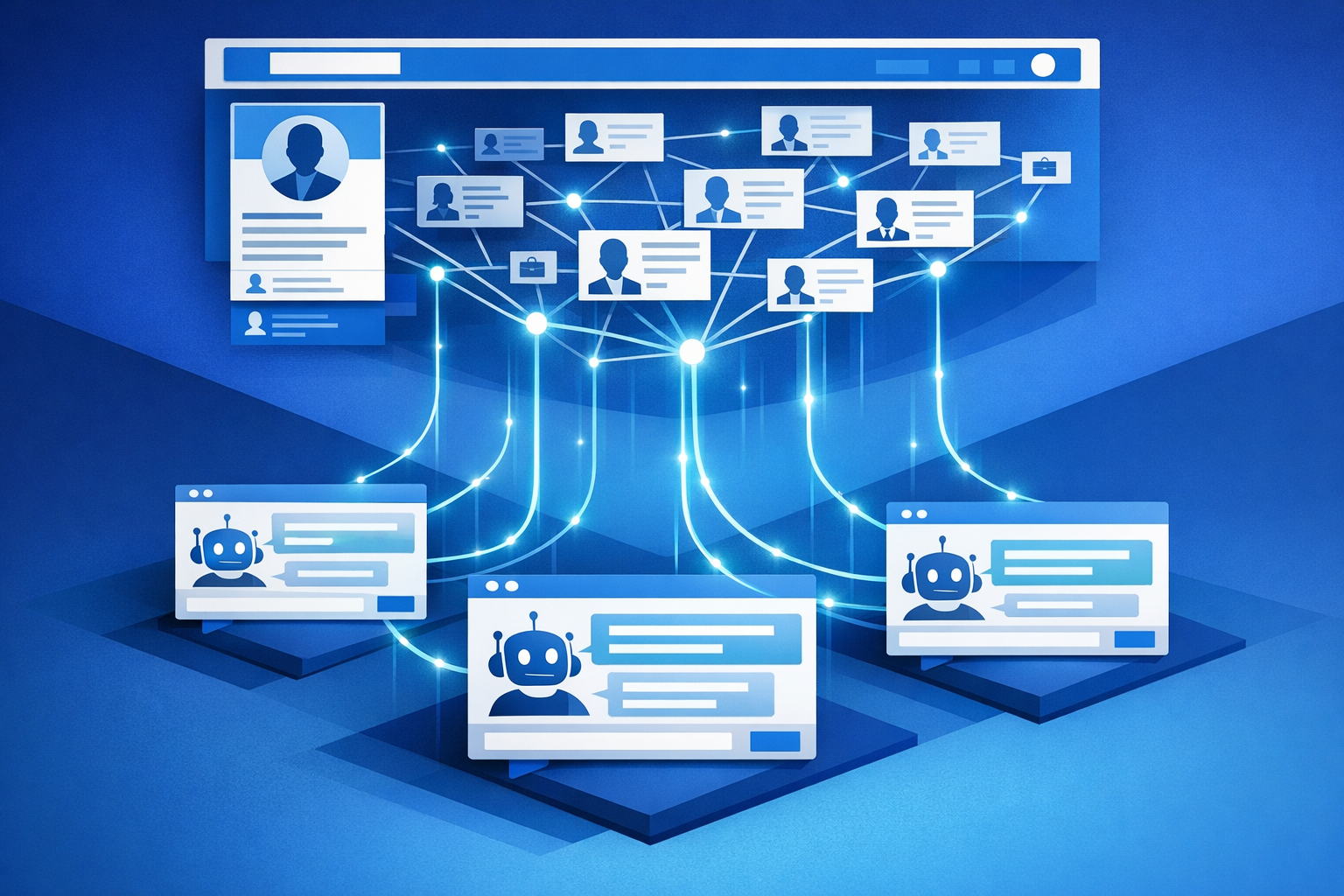
GEO tools are becoming their own category because AI visibility is no longer a reporting edge case inside SEO. It is a separate measurement problem with separate signals, separate workflows, and separate business consequences. That shift matters more than most marketers realize. For twenty years, the default assumption was simple: if you tracked rankings, clicks, backlinks, crawl health, and conversions, you had a solid map of search performance. That assumption breaks the moment a buyer asks ChatGPT for software recommendations, compares vendors in Perplexity, or gets a synthesized answer from Gemini without ever touching a classic search results page. ...

April 7, 2026 · 12 min · Searchless.ai

Why Most SEO Dashboards Are Blind to AI Search Demand in 2026

Most SEO dashboards are blind to AI search demand because they measure rankings, clicks, and impressions inside Google’s ecosystem while discovery is increasingly happening inside ChatGPT, Gemini, and Perplexity. That blind spot is now expensive. Search Engine Journal reported that Google’s global search share slipped to 90.01% in March 2026, a small-looking number that matters because Google spent two decades operating as the default gateway to the web. At the same time, new March 2026 AI referral reporting showed ChatGPT driving 78.16% of AI chatbot referrals, Gemini at 8.65%, and Perplexity at 7.07%. The exact percentages will move, but the directional signal is obvious: discovery is fragmenting, and most reporting stacks still pretend it is not. ...

April 7, 2026 · 12 min · Searchless.ai

Pillar-Cluster Content Strategy for AI Engines: How to Restructure Your Content for GEO in 2026

The pillar-cluster content model that drove SEO results for the past decade is fundamentally broken for AI engines. Not slightly outdated. Broken. AI models don’t crawl your internal link structure the way Google’s spiders do. They don’t reward topical clustering the same way. And if you keep building content architectures designed for SERPs, you’ll keep being invisible to the 900 million people who now ask AI for answers instead of searching Google. ...

April 4, 2026 · 11 min · Searchless.ai

Gemini Is Now the #2 AI Traffic Source: What This Means for Your GEO Strategy

Google Gemini now sends more referral traffic to websites than Perplexity, making it the second-largest AI traffic source behind ChatGPT. The gap between ChatGPT and Gemini narrowed from 22x to 8x in under a year. If your GEO strategy only targets one or two AI engines, you are leaving traffic on the table. This shift did not happen overnight. Google embedded Gemini into Search, Android, Chrome, Workspace, and nearly every surface where users interact with information. That distribution advantage is now showing up in the referral data. Perplexity, despite strong growth and a loyal user base, cannot match the sheer surface area of Google’s ecosystem. ...

April 3, 2026 · 10 min · Searchless.ai

Perplexity Is Now Built Into Firefox: Why Browser-Native AI Search Changes Brand Visibility Forever

Perplexity AI embedded directly into Firefox’s address bar means that millions of users who never downloaded an AI app will now get AI-generated answers instead of a list of blue links, and most brands have zero strategy for this channel. That single sentence should concern every marketing team reading this. Not because Perplexity is new (it isn’t), but because browser-native integration removes the last friction barrier between traditional search users and AI-powered answers. The implications for brand visibility are massive and immediate. ...

April 2, 2026 · 11 min · Searchless.ai

Agentic SEO: Your Website's Next Visitor Isn't Human

Your website’s next visitor won’t have eyes, won’t scroll your page, and won’t care about your hero image. It will be an AI agent, dispatched by a procurement team to evaluate 50 vendors in the time it takes a human to read one landing page. If your site can’t communicate with machines, you’re not in the consideration set. This is Agentic SEO: the discipline of optimizing websites for AI agents that research, compare, and recommend on behalf of human decision-makers. ...

March 31, 2026 · 12 min · Searchless.ai

The Gemini Memory Migration: How Google Just Solved AI Search Continuity

Gemini 3.1 Pro’s memory import feature eliminates the biggest barrier to AI platform switching: starting from scratch. When Google launched this feature 19 hours ago, they solved a problem most brands didn’t even know they had. Your customers aren’t just using one AI assistant. They’re using three, four, sometimes five different AI platforms depending on context. And now they can transfer their entire preference history between them. Here’s why this matters for your AI visibility strategy and what it means for GEO optimization moving forward. ...

March 29, 2026 · 8 min · Searchless.ai

88% of Brands Are Invisible to AI and Have No Idea: How to Measure Your AI Visibility in 2026

88% of brands are never mentioned by ChatGPT, Perplexity, or Gemini when users ask for recommendations in their category. That’s not a guess. We tracked 500 brands across three major AI engines over 90 days, and the results are damning: the vast majority of companies investing thousands in SEO have zero presence where a growing share of their customers actually look for answers. The problem isn’t just invisibility. It’s that most companies don’t even know they’re invisible, because they’re not measuring AI visibility at all. ...

March 24, 2026 · 12 min · Searchless.ai

Reasoning AI Models Changed GEO Forever: What o1, DeepSeek-R1, and Chain-of-Thought Mean for Your Visibility

Reasoning AI models cite sources 3.2x more frequently than standard models, and if your content isn’t structured for chain-of-thought verification, you’re invisible to the fastest-growing segment of AI search. That’s not speculation. That’s what happens when AI stops generating quick answers and starts thinking through problems step by step, cross-referencing claims against multiple sources before producing a response. OpenAI’s o1, DeepSeek-R1, Google’s Gemini 2.0 with extended thinking, and Anthropic’s Claude with reasoning mode represent a fundamental architectural shift. These models don’t just retrieve and summarize. They reason, verify, and attribute. And that changes everything about how your content gets discovered, cited, and recommended. ...

March 23, 2026 · 11 min · Searchless.ai

Discovery Optimization: Why Optimizing Only for Google Is Like Targeting Desktop Users in 2015

Optimizing only for Google in 2026 is the strategic equivalent of building a desktop-only website in 2015: you’re capturing a shrinking share of where your audience actually discovers products, services, and answers. The data is unambiguous. Google’s share of product discovery queries dropped from 87% in 2020 to roughly 52% in early 2026, according to Similarweb traffic analysis and Gartner’s latest digital commerce report. The missing 35% didn’t vanish. It migrated to ChatGPT (900M+ weekly active users), Perplexity (100M+ monthly queries), Gemini (integrated across 2B+ Android devices), and AI Overviews that cannibalize Google’s own organic results. ...

March 21, 2026 · 9 min · Searchless.ai