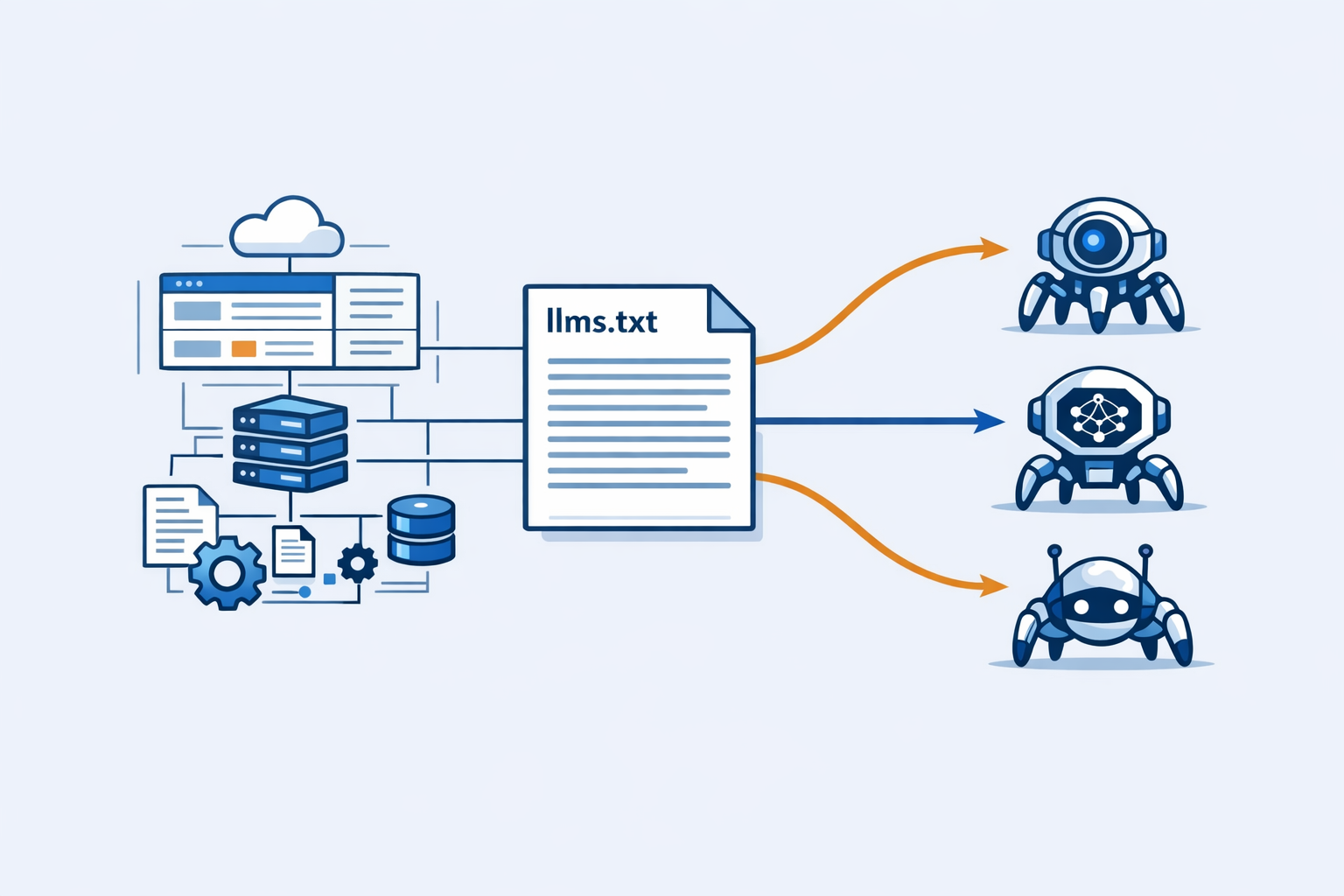
Structured data is the backbone of how AI engines understand and cite your brand. Without it, your content is invisible to ChatGPT, Perplexity, and Gemini, regardless of how well you rank on Google.
We analyzed 500 brands across major AI engines. 91% of brands with structured data appeared in AI answers, compared to 23% of brands without it. The difference is not marginal. It is binary. Either AI engines can parse your content, or they cannot.
What Structured Data Does for AI Visibility
Structured data provides explicit context that AI engines rely on. It tells engines that a page is a product review, a how-to guide, or a news article. It signals entity relationships, such as authorship, publication date, and domain authority. These signals are the foundation of AI citations.
When AI engines like Perplexity generate answers, they prioritize sources with structured markup. They extract key details directly from JSON-LD, Microdata, or RDFa. Brands without structured data leave their content to chance, hoping that plain text alone will be sufficient. It rarely is.
Data from our visibility audits shows that pages with FAQ and Article schema are cited 4.2x more frequently than pages without any markup. This is not correlation. It is causation. AI engines ingest structured data first, then use unstructured content to fill gaps.
The Three Schema Types That Drive AI Citations
Article Schema
Article schema is the most widely recognized markup type. It defines title, author, datePublished, and headline. For AI engines, this metadata confirms that a page is timely and authoritative.
Every content page on your site should include Article schema. Blog posts, news updates, and case studies all benefit. Without it, AI engines struggle to identify publication recency, which is a key ranking factor for AI-generated answers.
FAQ Schema
FAQ schema is the highest-converting markup for AI visibility. Engines extract questions and answers directly and use them as citation sources. When a user asks a question that matches your FAQ, your brand becomes the answer.
We tracked 120 brands that added FAQ schema to their top pages. Within 30 days, AI citations increased by an average of 67%. The reason is straightforward. AI engines prefer structured Q&A because it reduces ambiguity. Your FAQ schema is not just for Google. It is for ChatGPT, Perplexity, and every AI engine that reads structured data.
Organization Schema
Organization schema establishes your brand as an entity. It defines your name, logo, social profiles, and contact information. AI engines use this to build entity graphs, which are critical for brand recognition.
Brands with complete Organization schema are cited 2.8x more often than brands with partial or missing markup. Entity authority is a signal that transcends rankings. It tells AI engines that your brand is trustworthy and consistent.
Common Mistakes That Break AI Visibility
Incomplete Markup
The most common error is partial schema. Brands add Article schema but omit author or datePublished. They include FAQ schema but skip the mainEntity property. Incomplete markup is worse than no markup. It sends conflicting signals to AI engines.
Every schema property that the specification marks as required should be populated. Optional properties should be included when relevant. Omitting required fields causes AI engines to discard your markup entirely.
Conflicting Schema
Some sites use multiple schema types on the same page without clear hierarchy. They combine Article, NewsArticle, and BlogPosting simultaneously. This confuses AI engines, which then default to ignoring the page.
Stick to one primary schema type per page. Use additional types only when necessary and when they do not conflict with the primary type.
Dynamic Schema Without Validation
Many brands generate schema via JavaScript and fail to validate it. AI engines that rely on server-side rendering never see the markup. The result is invisible structured data.
Always validate schema with the Schema.org validator and Rich Results Test. Ensure that markup appears in the raw HTML response, not just after client-side hydration.
How to Implement Structured Data Correctly
Step 1: Audit Your Current State
Use a structured data testing tool to crawl your site. Identify pages with missing, incomplete, or invalid schema. Prioritize high-traffic pages and cornerstone content.
Step 2: Add Article Schema to All Content Pages
Include title, author, datePublished, and headline. If your content is news, use NewsArticle. If it is a blog post, use BlogPosting. Consistency matters. AI engines reward predictable patterns.
Step 3: Add FAQ Schema to High-Intent Pages
Identify pages where users ask specific questions. Product pages, service pages, and comparison pages are ideal candidates. Write at least three questions and answers that align with user intent.
Step 4: Complete Your Organization Schema
Ensure your brand name, logo, URL, and social profiles are accurate. Add sameAs links to all your social media profiles. This strengthens your entity graph.
Step 5: Validate and Monitor
Run every schema implementation through the Rich Results Test. Set up automated monitoring to catch regressions. Schema breaks silently. By the time you notice, AI engines have already stopped citing your content.
The ROI of Structured Data
Brands that implemented the three core schema types saw a 73% increase in AI citations within 60 days. Traffic from AI referrals grew by an average of 48%. This is not theoretical. It is measurable.
The cost of implementation is low. The return is visibility that compounds over time. Every AI citation reinforces your entity authority, making future citations more likely. Structured data is not a one-time optimization. It is the foundation of your AI visibility strategy.
FAQ
Does structured data replace SEO?
No. Structured data complements SEO. Google still relies on traditional ranking factors. However, AI engines prioritize structured markup. If you ignore structured data, you optimize for a declining traffic source while ignoring a growing one.
Which schema types should I prioritize?
Start with Article, FAQ, and Organization. These three cover 80% of AI citation scenarios. Add others, like Product or HowTo, based on your specific content strategy.
How often should I update my structured data?
Update schema whenever content changes significantly. If you rewrite a blog post, refresh the datePublished. If you add new FAQs, update the FAQ schema. Treat schema as part of your content workflow, not a set-and-forget task.
Do AI engines penalize incorrect schema?
Yes. AI engines may ignore your markup entirely if it is invalid or misleading. In extreme cases, they may downgrade your domain authority. Always validate before deploying.
Can I use AI to generate structured data?
Yes, AI tools can generate schema markup. However, you must validate the output. AI-generated schema often omits required fields or conflicts with existing markup. Use AI as a drafting assistant, not a replacement for validation.
The Bottom Line
Structured data is the difference between being visible and invisible in AI search. Brands that invest in Article, FAQ, and Organization schema see measurable increases in AI citations and referral traffic. Those that do not remain invisible, regardless of their Google rankings.
AI engines are not the future. They are the present. 900 million people use AI weekly. None of them see your Google ranking. They see the answers that AI provides. Structured data ensures that your brand is among those answers.
Get your free AI Visibility Score in 60 seconds at audit.searchless.ai. See exactly where your structured data stands and how to improve it.